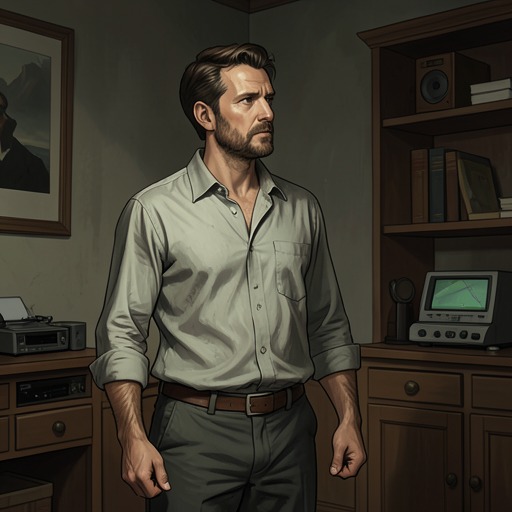
Smith
After We CollidedSmith, the five-year-old son of Kimberly and Christian Vance, is a quiet, observant child whose brief appearances bring the adults’ worries into unexpectedly direct focus. His recurring questions about death, first prompted by his father’s illness and later answered by Hardin, connect childhood uncertainty with the strained family and romantic relationships around him. His small but telling gestures also suggest a growing attachment to Hardin and a softness in Tessa that she does not show in every setting.
Identity and Introduction
Smith is introduced when Kimberly asks Tessa and Hardin to look after him because Christian is very sick and repeatedly vomiting. Kimberly describes her son as independent and largely inclined to keep to himself. He has dirty-blond hair, gives Tessa a small smile, and walks past her into the living room without speaking. Tessa greets him in an unusually child-directed voice; Hardin notices the change in her manner, marking Smith’s arrival as an occasion that draws out a playful side of her.
The first meeting establishes Smith through economical details rather than explanation. He is reserved, but not presented as distressed: his smile and unhurried entrance sit alongside Kimberly’s urgent concern for Christian. The contrast becomes important when Smith begins asking questions that the adults find harder to answer than his quiet manner initially suggests.
Questions About Illness and Death
While being watched, Smith suddenly asks whether his father is going to die. The question follows Christian’s serious illness, but Smith himself appears composed as he asks it. His calm delivery does not make the subject trivial; instead, it exposes how a child can voice a fear that the adults might otherwise leave unspoken. The scene gives his father’s illness a personal meaning beyond Kimberly’s rushed account of the practical need for childcare.
Later, Smith asks Hardin whether a woman will die, then presses him to explain who dies. Hardin answers in broad categories, naming bad, old, sick, and sometimes sad people. Smith follows the answer toward the emotional condition Hardin has mentioned, asking whether it applies to Hardin’s pretty girl. Tessa overhears this exchange. Smith’s questions are simple, but they make sadness and mortality part of the same conversation, bringing Tessa’s troubled state into view through a child’s attempt to understand what Hardin has said.
Smith’s questions about death recur across these encounters: first his father, then the woman discussed with Hardin, and finally a request to know who dies. The text does not explain why death occupies his thoughts, so the pattern remains a feature of his characterization rather than a diagnosed fear. Its effect is to interrupt the adults’ evasions with questions that require an answer, even when the answer is uncertain or inadequate.
Connections with Tessa and Hardin
Smith’s interactions with Tessa are quiet but significant. At a later family gathering, he asks where Hardin is, describing him in relation to Tessa. The phrasing affects her, and she recognizes that her emotional distance is beginning to give way. Smith does not argue for a reunion or explain the couple’s history; his familiar way of placing Hardin beside her simply makes their connection harder for Tessa to set aside.
Hardin, meanwhile, is shown engaging with Smith directly. When Smith asks about death, Hardin attempts to answer rather than dismissing the question, though his reply includes the suggestion that sad people can die. Later, when Smith wanders away, Hardin goes after him. Kimberly notices the pursuit with confusion and evident tenderness. The episode offers a modest sign of Hardin’s attentiveness to the child, without establishing a formal family role or suggesting that Hardin’s behavior resolves the larger conflicts around him.
Narrative Role
Smith’s presence links otherwise separate pressures: Christian’s illness, Tessa’s uncertain feelings about Hardin, and Hardin’s effort to respond to a child in his care. Because Smith is both self-contained and willing to ask stark questions, his scenes balance quiet observation with directness. His repeated inquiries about death expose anxieties that adult conversation does not readily settle, while his association of Hardin with Tessa reflects their bond back to her at a moment when she is trying to maintain distance. Smith remains a minor character, but his appearances make private worry visible through the concerns and attachments a child expresses without adult explanation.